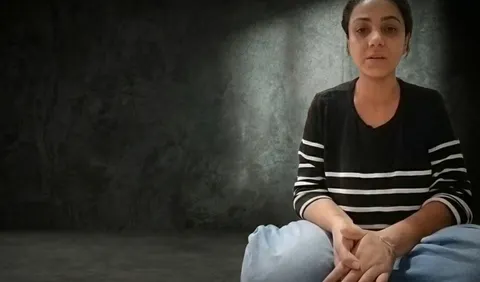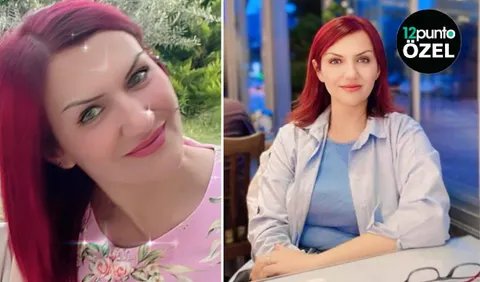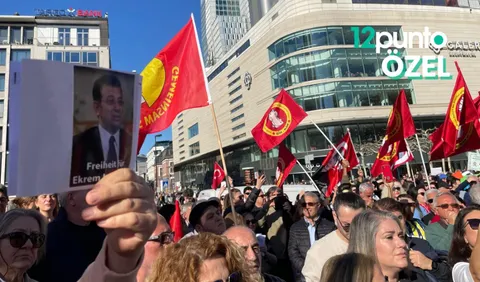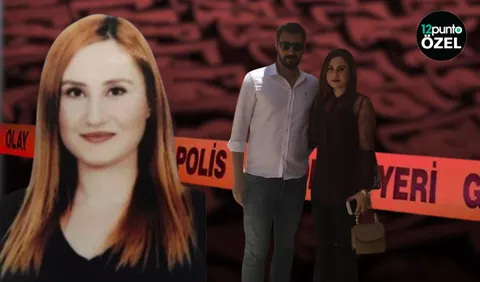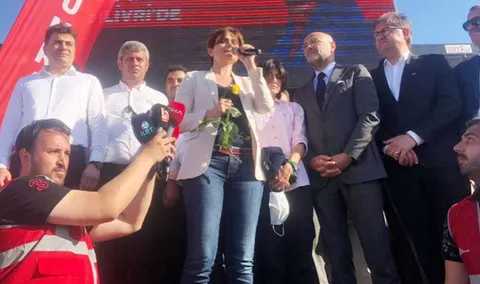
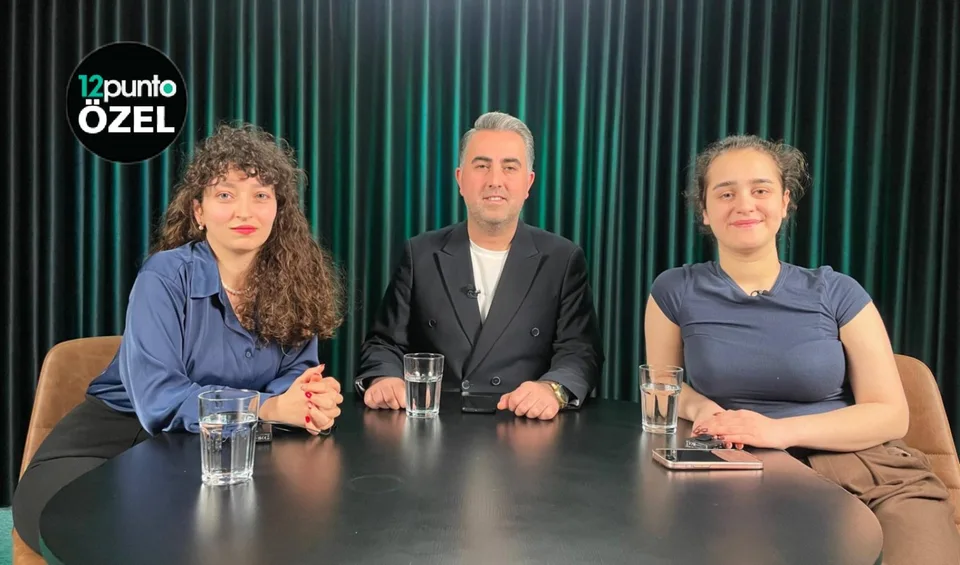
Irmak Uyan was detained in the dawn operation of the Anti-Terror teams on the morning of March 24, after participating in the student march in Beyazıt on March 19. Uyan, who had been in Marmara Closed Penal Institution (Silivri Prison) for more than 2 weeks, was released on April 11. Uyan's words, which told 12Punto about the period he spent in prison, revealed how the current conditions inside led to human rights violations.
Talking about the inadequate conditions of the detention center at the beginning of the detention process, Uyan said that the officers did not provide any materials even for toilet needs:
"We were lying on sponges on the floor in the holding cell. We were not even given a napkin for the toilet. When we asked for a napkin, the response was 'The toilets are clogged'. They only gave us a sandwich with spoiled cheese in it as food. We were afraid, we did not want to eat. We said we were hungry, our lawyers wanted to send food, but it was not accepted."
'THE WARD FOR 46 PEOPLE WAS OPENED WITH A CAPACITY OF 32 PEOPLE'
Stating that there were 13 people when they first entered the prison, Uyan explained that the ward was full and the crowd increased in the following days:
"The ward had just been opened for us. We laid out our own beds. We woke up one morning and saw new people coming. The number of women increased every day. There were 46 people staying in the ward where 32 people were supposed to stay. Beds were thrown on the floor, the rooms were tripled. At the first open sight, families had a stampede, then they separated the wards."
AGAINST 'COVER YOUR FACE' ADVICE: 'I DID NOTHING'
Irmak Uyan, who stated that she was taken with handcuffs behind her back during the police check-in process, describes a "recommendation" given to her as follows:
"A police officer came to me and said, as if he were doing me a favor, 'Cover your face, my advice to you.' I said, 'Why should I cover it? I didn't do anything. Even you don't know why you took me.' I ask the police, 'Why did you take me?' his answer is: 'I don't know, we will find out when we go to the police station.'"
'IT WILL NOT USE ANYTHING IF WE KEEP SILENT BECAUSE WE WILL BE PICKED UP'
Stating that he is aware of the pressures he faced after his detention and detention period, Uyan emphasizes that he will not give up the fight despite this:
"Yes, I know there are threats. They say, 'You can't enter the government, you'll be flagged'. But staying silent just because we'll be flagged won't do any good. They can't tag all of us. My schooling was extended, so be it. Was it worth it? It was worth it. All of those who are in prison are my classmates. We may have different political views, but we marched for a common goal."
THE 'MARGINAL' DISCOURSE AND DISCOUNTING OF YOUTH
Irmak Uyan also opposes the "marginal" discourse, which is used to stigmatize young people, especially in public, with the following words:
"While some of my friends are in prison, their families are called. They are told, 'Your son is hanging out with marginal groups, save him.' But we will never give up. I don't regret leaving because I know I was right. I also knew that all this was illegal. Whether we are 10 people or 10 thousand people, we will demand our rights in Beyazıt Square. Regardless of our political views, we will always stand side by side against the usurpation of will."
LAWYER ONUR CINGİL: WE TALK ABOUT POLITICS, NOT LAW
Irmak Uyan's lawyer, Onur Cingil, argues that what happened is not just a legal issue, but a method of political pressure:
"As a lawyer, I know that this is a deep unlawfulness. This is not sustainable. But we are talking about politics, not law, here. Taking 18-19 year old children with dawn operations and associating them with terrorism is unacceptable."
Cingil also draws attention to the physical violence experienced by detained young people:
"One of my young clients in prison had a crack in his nose and a cleft in his eyebrow. I took a photo of him. His family was afraid of me publishing that photo. But my client said: 'Brother, I will come out and convince them.' That initial fear has now turned into encouragement."
A GENERATION'S SEARCH FOR REPRESENTATION
Irmak Uyan's experiences, beyond just an individual victimization, also raise serious questions about freedom of expression, the right to assembly and the position of youth in the political arena in Turkey.
While Article 34 of the Constitution of the Republic of Turkey guarantees the right to peaceful assembly and demonstration, Articles 10 and 11 of the European Convention on Human Rights protect the freedom of expression and assembly. As a country party to these obligations, Türkiye is responsible for securing these rights. However, the detention and detention processes experienced by Irmak and his friends show that these obligations have been seriously violated.
Approaching young people's political actions from the perspective of "marginalization" or "terrorism" is incompatible with the fundamental values of a democratic society. However, as Irmak explains, this time young people with different political views meet on a common point: to stand against the usurpation of will.
For years, youth in Turkey has been viewed not as a political subject but as a mass that needs to be controlled. However, today's young generation is digitally visible, has a high organizational capacity, and is prone to collective struggle beyond political divisions.
Lawyer Onur Cingil's words, "We are talking about politics, not law", are a warning not only for today's situation but also for the future. Responding violently to the peaceful demands of young people targets not only those individuals but also the democratic accumulation of a country.
The following words of Irmak Uyan summarize this picture in its simplest form:
“We may have our differences, but we were side by side against the usurpation of will.”
This sentence is the voice of youth carrying the will to reshape a society. And suppressing this voice means losing not only today, but also tomorrow.