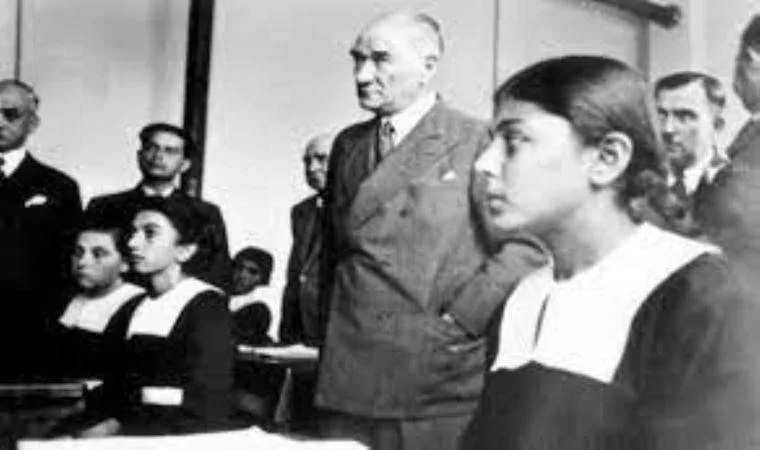
We celebrate April 23 National Sovereignty and Children's Day, which the Great Leader Mustafa Kemal Atatürk presented to children 101 years ago, with great pride and happiness. Today, which is an important turning point in the liberation struggle of the Republic of Türkiye, the Turkish Grand National Assembly celebrates its 102nd anniversary.
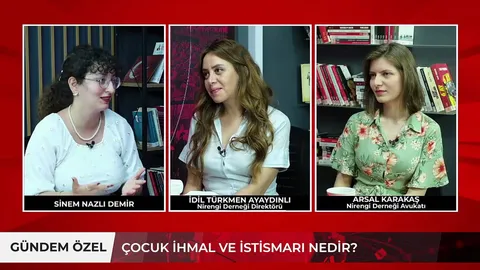
Triangulation Association has prepared an important study explaining the importance of children's right to participation within the scope of April 23 National Sovereignty and Children's Day. Association lawyer Arsal Karakaş expressed his views on children's right to participation.
Touching on the importance of National Sovereignty and Children's Day, Av. Arsal Karakaş; "It is the national holiday of Turkey, which is presented to all children around the world by the representatives of the Grand National Assembly of Turkey, especially Mustafa Kemal Atatürk, and celebrated every year on April 23, in honor of the opening of the Turkish Grand National Assembly on April 23, 1920. Underlining that the future will be established and developed by today's children, Atatürk put forward his perspective on the right to participation of children, which is emphasized today, in the democracy-based Republic of Turkey, which was founded a hundred years ago. The right to participation of children has been increased in recent years. "It is a concept that is on the agenda and where regulations regarding this right are beginning to become visible." he said.
WHAT IS THE RIGHT OF CHILDREN TO PARTICIPATE?
Hunting. Before touching on the details of children's right to participation, Arsal Karakaş emphasized that it is important to underline the definition of child within the framework of international conventions and Turkish law and said, "According to Article 1 of the United Nations Convention on the Rights of the Child, every individual up to the age of 18 is considered a child. In parallel with this, in Turkish Law, every individual is a child until the age of 18 (until they reach adulthood). Children play various roles in society in many different areas such as work, education, family life. These roles are mostly Its boundaries were sharply determined by adults. Until the 1980s, the idea that children could also have the right to have a say/participate in determining these roles was not widespread/acceptable. The right to participation of children was first stated in Article 12 of the United Nations Convention on the Rights of the Child, stating that "States Parties recognize the right of the child who is capable of forming opinions to express his or her views freely on all matters concerning him/her, with due consideration given to these views in accordance with the child's age and degree of maturity." clearly stated as follows.
Based on this article; "Children's right to participate freely in the decision-making processes of issues that directly or indirectly concern them is called the right of children to participate." he said.
WHAT DOES CHILDREN'S RIGHT TO PARTICIPATE INCLUDE?
Hunting. Arsal Karakaş "The scope of children's right to participate in decision-making processes is quite wide. For example, being able to choose the courses offered to them in education life that suit their interests, being informed/deciding about medical treatments and interventions to be applied to their own body, being involved in the making processes of laws related to children, etc. As can be seen, many rules and processes in society are directly or indirectly related to children, and excluding children from these processes would be contrary to democracy and human rights.
Article 12 of the United Nations Convention on the Rights of the Child also emphasizes the importance of hearing children directly during the process of participation in the justice system. In judicial or administrative investigations, children may be included in the system as victims or children dragged into crime. According to TÜİK data; The number of incidents involving children who came or were brought to security units in 2020 was 450 thousand 803. In these incidents, it was observed that 37.9% of the children were included in the system as victims, and 25.3% were involved in the system on the grounds that they had committed an act defined as a crime by law (being dragged into crime).
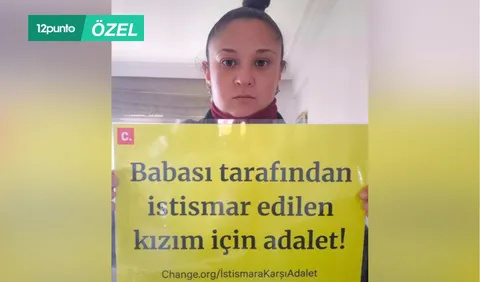
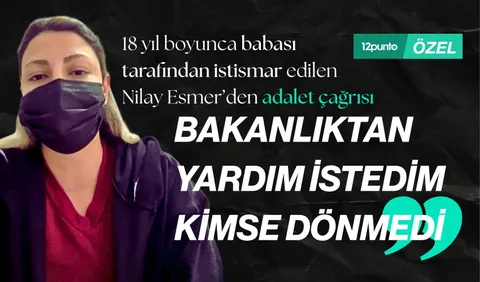
Children involved in the justice system have the right to actively participate in any decision-making process that may be made about them. Within the justice system, children must be informed about the process, their statements must be taken with the help of an expert, and their rights under the law must be informed one by one at every stage. It can be said that one of the good examples of children's participation in the justice system is Child Monitoring Centers (ÇİM). Statements of children who are victims of abuse regarding the crime they are exposed to are taken in places called ÇİM. Here, the child's statements are taken in the presence of an expert, thus preventing his/her presence in institutions such as police stations or courthouses. In practice, these centers are generally used for children who are victims of sexual abuse, but there is no limitation in legal regulations regarding the type of abuse. According to legal regulations; "There is no obstacle to taking the statement of every child who is a victim of abuse, whether physical, sexual, emotional or economic, at ÇİM." he said.
WHAT DO THE DATA ON CHILDREN'S RIGHT TO PARTICIPATION IN TURKEY SAY?
Hunting. Karakaş also mentioned that it is difficult to find data on children's right to participation in Turkey and added: "It is difficult to find data based on a detailed research on children's right to participation, which is a relatively new concept. The best example of data based on a very comprehensive research in the literature is Oğuz Polat and Tanzer Gezer's work titled Social Inclusion of Children and the Implementation of Their Participation Rights. This research was conducted in 2007 in 10 provinces in Turkey between the ages of 7 and 18. Based on interviews with 10,000 children, while the rate of agreement for girls to have a say in matters affecting their lives at home was 9.7%, this rate decreased to 8.9% for the statement that boys have a say in decisions affecting their lives at home, while this rate decreased to 12.3% at school.
In the light of these data, it is possible to reach two conclusions. Firstly, the participation of both boys and girls in decision-making processes in education is much lower than their participation in family life. Children can act according to what is determined by adults in their educational life. Secondly, the participation rate of girls in decision-making processes in family and educational life is quite low compared to boys. This situation is the clearest indicator of gender inequality. Girls cannot play an active role in family or educational life in the decision-making process about themselves. "Girls are forced to comply with adults' strict rules more than boys."
WHAT ARE GOOD PRACTICE EXAMPLES REGARDING CHILDREN'S RIGHT TO PARTICIPATION IN TURKEY?
Hunting. Arsal Karakaş said, "In 2013, with the support of UNICEF, Provincial Children's Rights Committees were established in 81 provinces within the Ministry of Family and Social Policies. It was aimed to represent children of all ages and segments in these committees. In the same period, the Ministry organized a workshop with children from the provincial committees within the scope of the new Constitution studies and presented the workshop report to the Turkish Grand National Assembly.
Another prominent example is; It is seen in the Law on Associations that came into force in 2004. According to Article 3 of the Law, minors who have the power of discernment over the age of fifteen; Children are given the right to establish children's associations or become members of established children's associations with the written permission of their legal representatives in order to protect and develop their social, spiritual, moral, physical and mental abilities, sports, education and training rights, social and cultural assets, family structure and private lives.
In addition, it has been stated that children over the age of twelve can become members of children's associations with the permission of their legal representatives, but they cannot take part in supervisory and management bodies. Thus, the participation of children in activities such as seeking their rights, advocacy and involvement in decision-making processes through civil society was supported.
Apart from these examples, there are regulations that support children's active participation in decision-making processes through laws. However, it is necessary to pave the way for more effective access to these regulations in practice.” he stated.
Finally, touching on what can be done within the scope of the child's right to participation, Atty. Arsal Karakaş “First of all, children should be given basic education appropriate to their age in the areas of awareness of being an individual and freedom of expression.
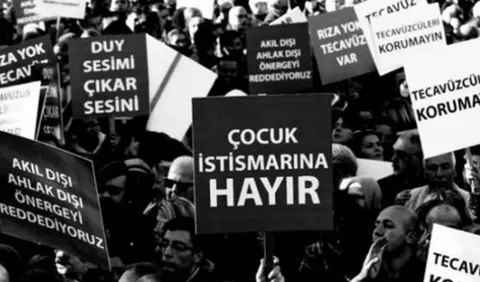
Children should know that they are individuals within the system and that they have a say and rights in many areas, especially on issues that concern them. Children who grow up with the awareness of having a voice and rights that we mentioned; It is also known that the rates of saying no to abuse cases, reporting abuse knowing that it is a crime, and coping with traumas are higher.
However, good examples such as the Provincial Child Rights Committees and Children's Associations we have given above need to be supported in practice and made more functional. In addition;
Allowing children to choose courses according to their interests in their education life,
Informing children about the medical interventions and interventions to be applied to them in the field of health, in accordance with their age, and giving them the opportunity to make decisions,
If children appear in the media, their privacy should be taken into account, depending on the reasons for their participation, and especially the right of children who are victims of abuse to be forgotten should be respected.
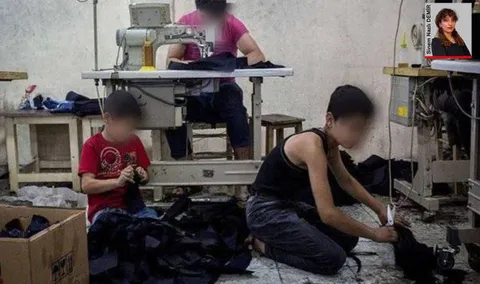
Preventing children from working in jobs that are not appropriate for their age and development, and preventing children from being forced to work,
"Raising awareness of society and families through training for adults on concepts such as awareness of children as individuals and the right to participate, and similar basic activities can be implemented to support children's participation rights," he said.
Nirengi Association is a non-governmental organization that carries out projects in the fields of Psychosocial Support, Humanitarian Aid-Disaster and Emergency Management and Development, Direct Support for Groups at Risk, Advocacy and Networking, Policy Making, Social Dialogue and Development, Capacity Building and Research.