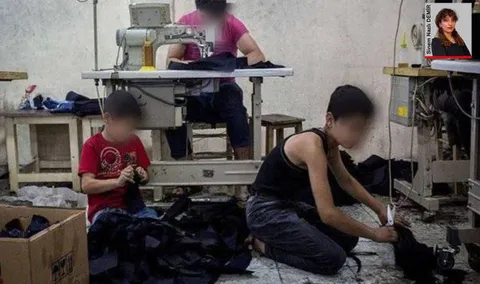
Although research is conducted by certain non-governmental organizations or political parties on children driven to suicide, no data on this issue is regularly published in Türkiye.
Finally, the report prepared by CHP Deputy Chairman Fethi Açıkel and Veli Ağbaba in 2019 revealed the problems of children in Turkey. According to the report, there were 232 child suicides in 2019.
In her research published in April, CHP member Gamze Taşcıer noted that there were children among the suicide cases and added:
"In March, we saw that 13 children ended their lives by suicide. This month, 8 children ended their lives. The age of suicide has decreased to 13. Among what we could detect, the province with the most suicides was Denizli, with 10 suicide cases this month. There were 9 deaths by suicide in Şanlıurfa, and 7 each in Antalya and Diyarbakır."
Associate Professor Veysi Çeri and Psychologist Ezgi Burcu Yıldız talked about the important points and child psychology on the subject of children and suicide to Cumhuriyet.
Associate Professor Veysi Çeri explained, "Suicide can be described as an individual's attempt to take his own life and end his life. Suicide attempt should also be mentioned here. Suicide attempt can be described as a person's attempt to end his life."
Highlights from the interview are as follows:
What is suicide?
''Suicide can be defined as an individual's attempt to kill himself and end his life. It is also necessary to mention the suicide attempt here. "Suicide attempt can be described as a person trying to end his life."
'BEING NEGLECTED OR EXCLUDED MAY INCREASE THE RISK OF SUICIDE'
Are there any misconceptions about suicide?
''There are many wrong things that are known as true. One of them is that people who commit suicide seem to do so out of spoiledness or boredom. However, today's research shows that suicide is much more than just being spoiled, and that there are social, environmental and genetic factors that drive a person to suicide. "If there is someone in your family who has committed suicide in the past, your risk of committing suicide is higher."
Why does a child have thoughts of suicide? At what stage does he think about death?
''Research shows that children who commit suicide have a depressive period beforehand, experiencing situations such as not enjoying life and restlessness. Or we know that children who act without thinking are more at risk of committing suicide. I can say that the biggest reason is depression. Lack of environmental supportive factors, abuse, which we call negative childhood experiences, emotional neglect, exclusion, and insults by the environment at home, peer circle or family, may increase the risk of suicide in children and young people. Recent studies show that suicide among young people has increased since 2014. It is emphasized that one of the most important reasons for this increase is the increasing use of social media in recent years. "We can say that screen exposure for more than two hours a day increases the risk of suicide."
'SUICIDE TENDANCE CAN BE PREVENTED'
How can we tell if a child is considering suicide?
''The child's suicidal tendency can be noticed. And it's preventable. Sometimes it is very difficult for them to give clues. But in almost all suicides, situations such as the person starting to talk about death in the weeks before the suicide, making statements about why he is alive, being in a state of intense sadness and distress, or giving away some of his valuables for no reason, having feelings of extreme pessimism, recently neglecting his duties, not paying attention to self-care, and increasing tension may actually make us think. In addition, searching for suicide on social media and researching suicide methods indicate that the person has suicidal thoughts. ''
In what situations do children feel helpless?
''What is traumatic for children is not the event; It is mentioned that he felt alone during that incident. I also think that the most painful thing for children is that they feel alone. Just because someone is with you doesn't mean they are not alone. Emotional loneliness here. It is also possible that his feelings are not understood, he lacks empathy, or he is not sure that those around him will help him when he has a problem. For example, having a good communication with the child's parents as a positive experience protects the child against many psychological negativities. Three-quarters of lifetime psychiatric illnesses occur before the age of twenty-five. However, a significant portion of people avoid consulting a psychologist before the age of twenty-five. Or they cannot apply. Treatments are also expensive and applications are crowded. It is not possible for hospitals to meet this burden. Sessions are ten minutes. This is never a psychiatric interview. Insurance must cover psychiatric examinations. "I think this intervention alone can reduce suicides."
'OVERDOSE MAY BE POSSIBLE IN ADOLESCENTS'
What should we do to ensure that children never think about suicide?
''No matter how good we make the environmental conditions for a child, there may be a possibility of a child attempting suicide in his genetics. Unfortunately, it is difficult to say clearly here, 'If we do this, we will finish it'. But I can say that suicides can decrease if we raise awareness of psychiatric diseases in society, establish a free suicide prevention line, end peer bullying and child abuse in schools, provide early treatment of diseases and provide a good enough family environment. Suicide, both the person committing suicide; It is a situation that leaves deep wounds for both the people behind it and the people behind it. "I think it is necessary to talk about it in the right way and to address it."
"HOPELESSNESS AND DESPITEMENT ARE RISK FACTORS"
Psychologist Ezgi Burcu Yıldız said, 'If feelings of hopelessness and helplessness accompany depression, they are risk factors for suicide. Risk-taking behaviors that we call masked depression; excessive interest in guns or knives, substance use; It may include behaviors such as causing injury or harm, or cutting various parts of the body. Especially parents and teachers need to observe carefully. Children may talk about or imply suicide methods. "Overdose is often possible in adolescents," he said.
The topics discussed with Psychologist Yıldız are as follows:
At what stage does a child plan suicide? Is there any information about why children are driven to commit suicide?
''Parents should definitely know the warning signs. Support can be obtained from school psychologists, guidance counselors and mental health experts. Make your home suicide-proof. What does this mean? Medicines, weapons and cutting tools should be out of reach of children. Don't be afraid to talk to your children. It is important to give your child space to express himself and share his feelings. Talking about suicide with the child reduces suicide. Suicide is not an option. Pay attention to your child's peer relationships. He may be indirectly talking about his concerns about his friends. You should be open and ask questions without boring him. If the child hints that he or she intends to commit suicide, take immediate action and get help. "When you receive these signals, stay with him and reassure him."
'BECAUSE YOU DON'T UNDERSTAND/BELIEVE ME/DON'T LISTEN TO ME'
What can be done to improve children's lives and prevent the risk of suicide?
''If we want to improve children's lives, the actions we will take are very clear. While we provide financial means to children, we can overlook their need for love and attention. No matter what, saying 'he won't understand anyway' and not listening to him and not giving him the opportunity can cause the child to withdraw and move away. When we look at suicide cases, people may have the idea of wanting to end their life. More importantly, they may commit suicide due to a reaction because they are not given the opportunity to relieve the pain of their suicide attempts, end their hopelessness and express it, or because what they say is not believed. When we look at the recent child suicides, the letters left behind begin with the words 'because you don't understand/believe/didn't listen to me'. Therefore, in order to be good for the child, it is very important for the healthy development of the child to listen to the child and pay attention to his/her feelings, to not spare the child our love, and to give him/her the opportunity to express himself/herself. We should also pay attention to these. "If you observe signs of withdrawal, depression, deterioration in relationships with peers, or estrangement from you in your child, you should seek support from an expert."
How do children perceive the concept of death? What are their differences from adults?
''The concept of death is perceived differently in children than in adults. Although children begin to be interested in death at a very early age, they do not have the mental ability to comprehend death before the age of 3. A child who experiences the loss of a parent before the age of three will not feel fear or sadness even if he is told that the person in question has died. He/she will experience difficulties resulting from deficiencies in the care provided by that person. Until the age of five, they cannot understand that death is the end. They may think of it as a reversible event. Although concepts such as death, dying, and dead are used by the child at the age of 3-5, the mental development to react with fear about death is not yet there. A four-year-old child who says 'I hope you die' sees death as a long separation. But he may think there will be a comeback. They may pretend to be dead in their games, they may try to scare you, they may announce that an animal is 'dead' when they see it. Because children in this age group think of death as a reversible situation.”
"I GET UNHAPPY WHEN I FIGHT WITH MY FAMILY"
We interviewed two children, ages 8 and 15, about how today's environment affects them.
The details of the meeting are as follows:
What makes you happy?
''Spending time with my family and sleeping makes me happy.''
''I love playing with my friend. I become unhappy when someone hits someone. "No offense."
What do you think might make children unhappy?
''I become unhappy when there is failure and my family fights.''
''I get stressed during exam times. I'm so bored of studying. "When I'm stressed, I become unhappy."
Are there times when adults do/do not understand children?
''I think it's happening. "Sometimes I think they don't understand the lessons and put pressure on them."
''I want to be so happy... I want to pass LGS and pass the university exam.''
What would you like to change in the world?
''The oxygen level is too low. Naturally, lakes are drying up. Our living spaces are starting to run out. "I wish I could make people more honest."
''For example, I get angry when someone beats someone. "For example, when people in the world are angry, the world is not beautiful at all."
If you had to give advice to adults, what would you say?
''I want the children's opinions to be heard, too. Let's ask for our opinion on many issues. No violence, I recommend this to adults. "The elders should treat the younger ones well."
''I wish everywhere in the world would bloom. "Adults should not upset each other."