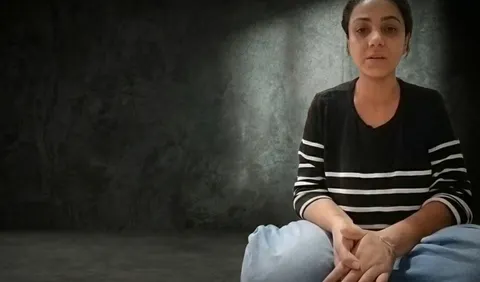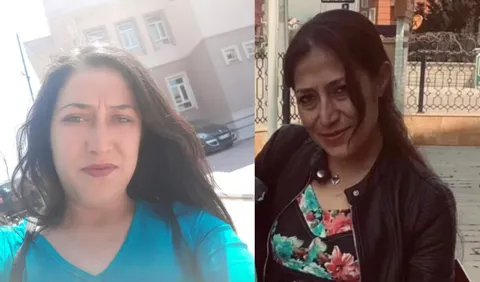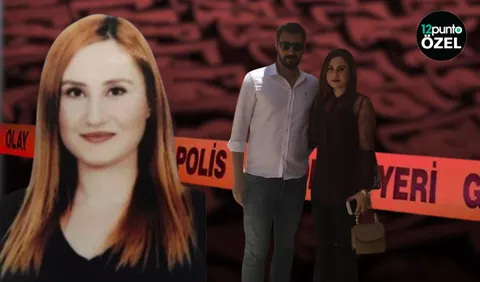
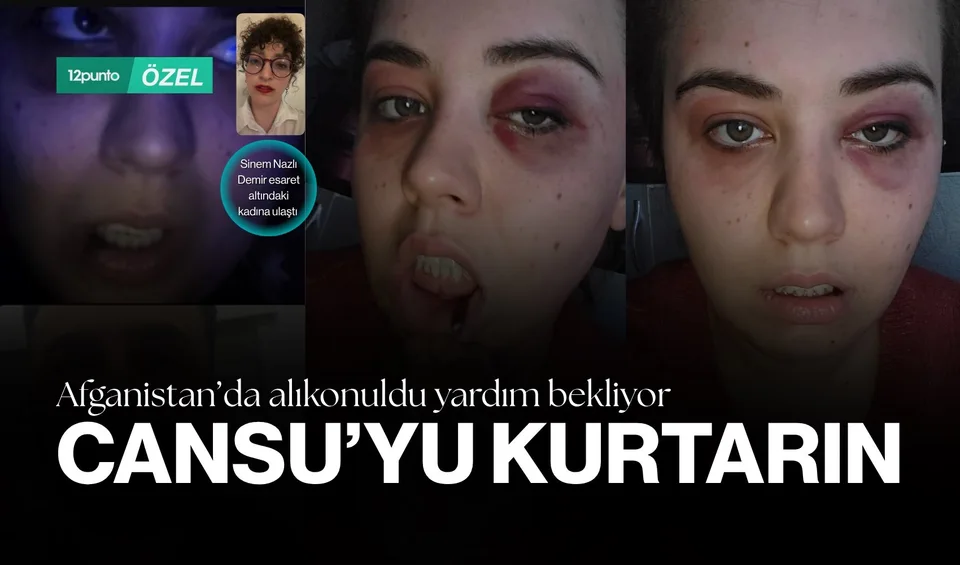
A video filmed by 31-year-old Turkish citizen Cansu Ndori, formerly Cansu Badur, in the house where she said she was being held against her will and subjected to violence in Afghanistan drew widespread attention in Türkiye.
12punto reached out to Cansu's family and started to follow the process closely. First, her brother was contacted, then a controlled and careful contact plan was created that went beyond normal journalistic methods to reach Cansu.
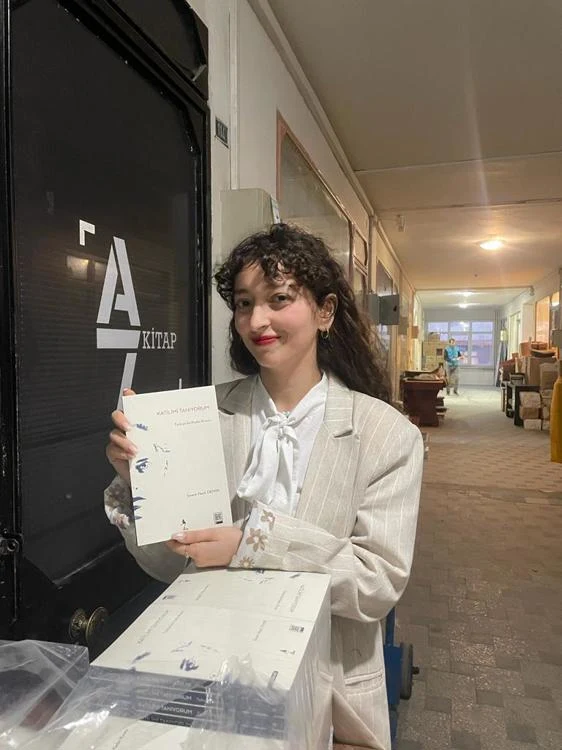
In this context, our reporter Sinem Nazlı Demir was included in the process not by revealing her identity directly, but in a way that would not risk Cansu's safety. Introduced by Cansu's brother as an old acquaintance from the neighborhood, Demir helped establish the necessary atmosphere of trust for the meeting to take place. Her brother laid the groundwork for this communication by telling Cansu, "Sinem should join us when we talk in the evening, she wants to see you."
CANSU'S LOCATION WAS DETECTED AND REPORTED TO THE AUTHORITIES
Her brother laid the groundwork for this communication by saying to Cansu, "As we talk this evening, as we do every evening, let Sinem join us, she wants to see you."
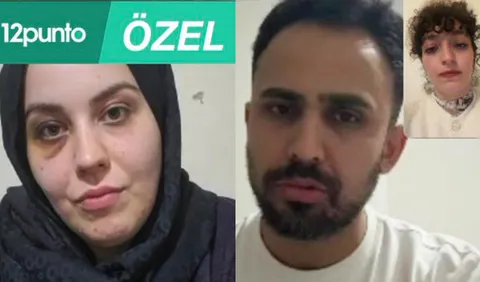
A video call took place at 02:31 on 12 April, Afghanistan time. It was not an interview in the conventional sense. No direct questions were asked about the violence, her confinement or her circumstances; to an outside observer, the conversation would have appeared ordinary.
After the meeting, Sinem Nazlı Demir started the process to contact the relevant authorities in line with the findings and data obtained. At the same time, an online interview was held with Cansu's older brother, Alican Badur, and the family's call was brought to the public.
ABDUL RECEIVED MY FATHER'S INHERITANCE MONEY FROM CANSU
Speaking to 12punto, Alican Badur explained in detail how the relationship between Cansu and Abdul started and at what point the process broke down. According to the family, the basis of this relationship was not one of trust, but economic exploitation from the very beginning:
“My father died in 2022, leaving my sister an inheritance of 80,000 Turkish lira at the time. Cansu was then working in a textile workshop in Sultangazi, where she met Afghan citizen Abdul Varsi Ndori. They began talking, and he borrowed the 80,000 lira from my sister. But he deceived her: he never paid the money back.”
ABDUL WAS DEPORTED IN 2022
The first critical development that changed the course of the relationship occurred when Abdul's legal situation in Turkey was revealed. After an argument, the police teams involved in the process determined that Abdul was a fugitive, and this completely changed the direction of the process.
This development not only resulted in Abdul's deportation; It was also the beginning of Cansu's journey that would extend to Afghanistan in the future.
Alican Badur described this period with the following words: "One day in 2022, Abdul and Cansu fight, and after this fight, the police teams investigating the incident realize that Abdul is a fugitive. Later, Abdul is deported to Afghanistan."
CANSU WAS FORCED TO MARRY IN AFGHANISTAN
Abdul, who continued his communication after the deportation decision, this time made an economic promise to persuade Cansu to go to Afghanistan. According to the family, this process involved a planned orientation. Cansu agreed to go to Afghanistan with the thought that she could get back the money that belonged to her.
After reaching Kabul, Abdul's family and Abdul used violence against Cansu and Cansu was forced to marry Abdul.
Alican Badur explained what happened as follows:
"Abdul sets a trap for Cansu and calls her to Afghanistan and says, "If you come here, I will give you your money." Then Cansu goes to Afghanistan, Kabul, and Abdul says, "I have a house, they will give the title deed to me soon, and if we marry you, I can pay you the debt from the money of the house." In order for the marriage process not to take long, Abdul's family forces Cansu and forces her to get married by using violence. Cansu has now been in Afghanistan for 1 year. She left and could not come back."
SHE REACHED THE EMBASSY, BUT THE TALIBAN PREVENTED HER FROM LEAVING THE COUNTRY
According to the family, Cansu's most concrete attempt to escape from her situation took place towards the end of February.
Cansu, who managed to escape from the house where she was subjected to violence, reached the Turkish authorities in Kabul and requested help. Badur stated that at this stage, the Embassy of the Republic of Turkey in Kabul was involved in the process, but the process remained inconclusive due to the current political conditions in Afghanistan. Brother Badur continued to convey what happened as follows:
“About five weeks ago, Cansu managed to escape from the house and sought refuge at the Turkish embassy in Kabul, her face swollen. Embassy staff tried to help her. They began the necessary procedures and placed her in a hotel. They asked us to buy the plane ticket, so we gathered money and bought her a ticket from Kabul to Istanbul for 4 March. But the official procedures were not completed in time, and she missed the flight. Meanwhile Abdul had filed a complaint, alleging that she had stolen his property deeds and was trying to flee. Turkish officials then bought a second ticket for 6 March. Cansu went to Hamid Karzai International Airport in Kabul that day, but Taliban officials would not allow her to leave Afghanistan. They told her that she was subject to an exit ban because her husband had complained about her, and handed her over to Abdul.”
“MY SISTER IS IN SERIOUS DANGER”
After Cansu was handed over to Abdul again, Cansu and her family's communication was cut off for a long time and the violence gradually increased. According to the family, Cansu's connection with the outside world is largely kept under control and her security is at serious risk. Alican Badur expressed the situation with the following words:
“Abdul broke Cansu’s phone, and we could not reach my sister for a long time. The violence has continued to escalate since then. Cansu eventually managed to buy herself a new phone. Abdul also uses drugs, so my sister is in serious danger.”
“WE ASK THAT MY SISTER BE BROUGHT BACK TO TÜRKİYE”
The family stresses that this is more than a case of confinement: Cansu’s health makes her especially vulnerable. Her brother Alican Badur called for her return to Türkiye in the following words:
“My sister has an intellectual disability following a blow to her head and cannot think at the same level as her peers. She has two children, aged seven and eleven, from her first marriage. We ask the authorities to bring my sister back to Türkiye as soon as possible. She is with someone whose mental health is unstable, and her life is in danger.”
No statement has yet been made by the Ministry of Foreign Affairs of the Republic of Türkiye or relevant official institutions about Cansu's situation. The family is waiting for a positive response from the authorities.
DOMESTIC VIOLENCE IS NOT CONSIDERED A CRIME UNLESS A BONE IS BROKEN
The new criminal law, which was put into effect by the Taliban administration in Afghanistan at the beginning of 2026, provides a legal framework that further deepens the existing oppression regime, especially for women and girls. These regulations not only limit fundamental rights and freedoms, but also create a structure that effectively makes violence against women invisible and institutionalizes impunity.
In the new system, the definition of violence is narrowed and only serious physical consequences such as "bone fracture" or "open wound" are included in the scope of crime, and physical violence other than this is left largely unpunished. This approach means that the systematic violence that women are exposed to is not legally recognized and eliminates the state's obligation to protect.
The most striking change for women and girls is the almost complete elimination of access to education and public life. While girls' education is banned, women's participation in working life is largely prevented. Additionally, women's daily lives are strictly monitored; Not being able to travel without a male companion, restricting visibility in public spaces, and limiting social relations with criminal sanctions are the main examples of this control. Even the private sphere is not exempt from this control; For example, visiting family without spousal permission may be subject to imprisonment.
On the other hand, the new criminal law establishes a system in which not only the state but also the society is included in the control and punishment process. Allowing individuals to intervene against behaviors defined as "sin" creates a constant threat of control and violence in public spaces for women. In this context, the main regulations that directly affect women can be summarized as follows:
Impunity of violence: Physical violence is not considered a crime unless a bone is broken or an open wound occurs
Education ban: Exclusion of girls from all levels of education
Restriction of freedom of movement: Inability to travel without a male companion
Legalization of domestic control: Punishment of women's unauthorized social relations
Expansion of social control: Giving individuals the power to intervene and punish on “moral” grounds
Continuation of corporal punishment: Punishments such as flogging continue to be used, including for women
When these regulations are evaluated together, it can be seen that women in Afghanistan are systematically excluded not only from the public sphere but also from legal protection mechanisms. The new penal regime creates a structure that normalises, renders invisible and reproduces violence against women at the social level, rather than preventing it.