Türkiye passed amnesty laws 52 times between 1921 and 2024. Seven of these (1922, 1923, 1933, 1960, 1963, 1966 and 1974) were general amnesties. The aim of most of them was to reduce the number of prisoners and convicts in prisons. The conditional release law passed in 2000 reduced this number from 70 thousand to 50 thousand at that time.
Due to the pandemic and the density in prisons, the penal execution law was amended on April 15, 2020, and initially 40 thousand people were released, and then a total of 110 thousand people were released.
Now we are faced with an amnesty regulation again. As of November 3, 2025, there were 428 thousand 267 prisoners in 402 prisons with a total capacity of 304 thousand 886 in Turkey. The omnibus law, publicly known as the "11th Judicial Package" and discussed with its amnesty regulations, came into force on December 25. Thus, the path to release was opened for those convicted of crimes they committed before July 31, 2023. Among those released, there are also men who are perpetrators of violence.
"The perpetrator was not punished"
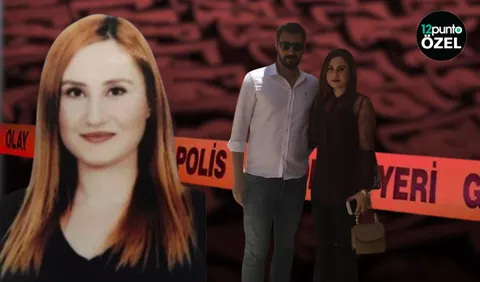
Her husband injured Kadriye Aydemir, who lives in Ankara, with a gun in 2021. Aydemir remained paralyzed. He awaits with fear the details of the next execution arrangement:
"I want the perpetrator who shot me not to go out in any way. If he had been taken out with this package, I would not be alive now. But the 12th Judicial Package is being talked about. His sentence may be reduced. I am in a constant state of panic. If they let the prisoners out and let us in, we would be safer. The man attempted to kill me. It has been five years, I cannot walk. I am 27 years old, I wear diapers, I am still like a baby. I cannot even go to the other room without a diaper. I am breathing, but I am no better than the dead. What the doctors said "The 11th Judicial Package has arrived, the 12th will come, then the 13th..."
"The prosecution let go and shot me an hour later"
Stating that the amnesty regulations threaten not only himself but also his entire family, Aydemir said that those who go to prison are released without good manners and commit more crimes, which is why he is afraid:
"I hope he will not benefit from the next judicial package. Should he be free after five years while I cannot even go to the market? In my case, the perpetrator stayed in custody at night and when the prosecutor's office released him at noon, he came and shot me an hour later. If an action had been taken by the prosecutor's office, I would not be in this situation right now."
Kadriye Aydemir's fears are not unfounded. Before the 11th Judicial Package was even implemented, signals for the 12th package were given.
As soon as the proposal was accepted in the Parliament, MHP Deputy Chairman Feti Yıldız; He lit the signal for a new amnesty package by saying, "Those who are exempt should be patient a little longer." It is said that the main agenda of the 12th Judicial Package will be the shortening of the period of detention. Accordingly; Convicts who have three years remaining on their execution with three-year parole will be able to be released. The path to parole will be opened to those who have served half of their sentence.
first murder
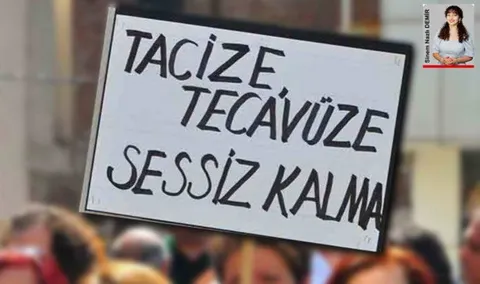
When the proposal, which was criticized by women's organizations and protested on social media and in the streets from the first day, became law, the Women's Platform for Equality (EŞİK) made a statement: "Secret or open amnesty is a very important factor in the increase in crimes against women, children and the whole society. These amnesty encourage potential perpetrators."
As the reactions continued to increase, the law came into force and evictions began. Okay Gür, who took advantage of the amnesty and was released from prison on charges of "trafficking or supplying drugs or stimulants", killed 28-year-old Rojda Yakışıklı, who was allegedly married in a religious marriage.
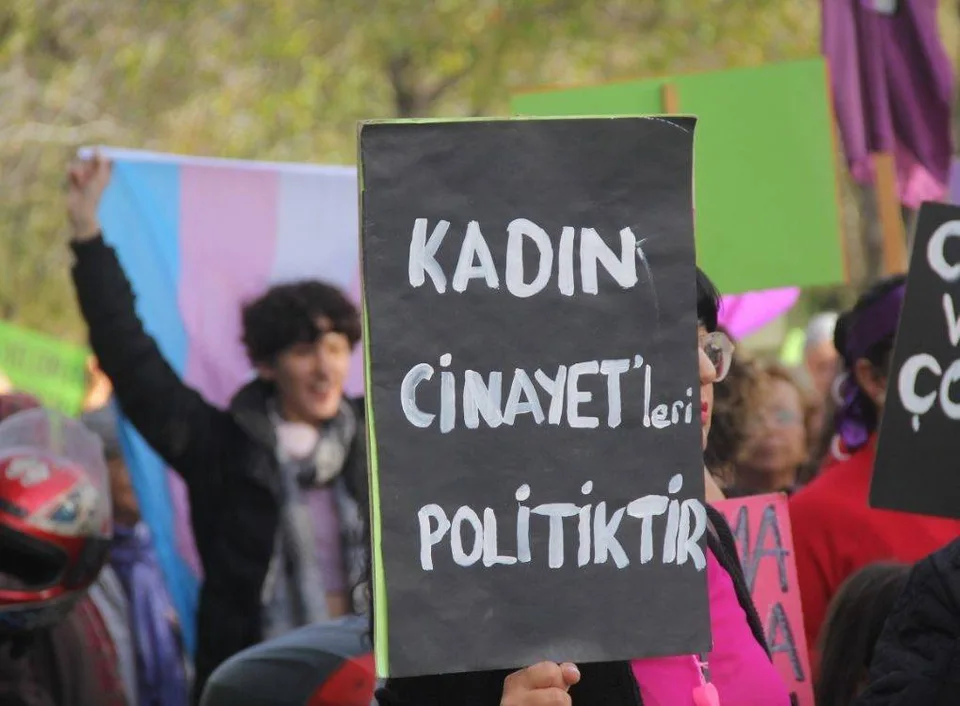
“The perpetrator of the dead women is politically motivated.”
The We Will Stop Femicide Platform is in front of the Parliament, where the amnesty package was accepted just a few days ago; "Okay Gür is not the only perpetrator. The perpetrators are those who passed this judicial package in this Parliament without thinking, and the political will behind it," he said.
While the concerns were justified by this murder; Women who were subjected to violence explained their concerns about the pardon or early release of perpetrators who are in prison for other crimes:
“I felt bad when I saw the amnesty news”
E.S., who lives in Kocaeli, was subjected to violence by her husband for many years. The perpetrator was not punished for this reason, but is in prison for other crimes he committed. E.S. is afraid that he will be released from prison with the new amnesty. He is angry with those who passed the bill in the Turkish Grand National Assembly.
Aydemir says:
"He was beating me, I fainted, he woke me up with cold water and used violence again. If these criminals were a punishment, they wouldn't dare like this. They dare to do this because there is no punishment for what they have done so far. These people continue to inflict violence on women. I felt very bad when I saw the amnesty news. No crime should go unpunished. I also want to continue my life freely. Why should I live in fear?"
According to him, women are being dragged into an increasingly helpless position by amnesty regulations. He underlines that his children are also at risk:
"The state forgives, but women do not. Why should I forgive? I have been through so much, and everything I have experienced has gotten away with it. It has all gone unpunished. I have been left with the deterioration of my psychology and the deterioration of my children's mental health. Even in such a situation, we are trying to raise healthy children. Women's job is very difficult. Such people should not go out. There is no rest for women and children as long as they are outside. Why am I in fear? I am trying to make my voice heard. What more can I do? We are helpless. We are the people who make this decision. "We choose, they get somewhere with our votes. Do those who forgive have to experience the same things as us? Those who commit crimes walk around with their hands free. I live thinking about this possibility all the time."
“Early release is also a danger”
Soner Sida Ergin, Kadriye Aydemir's lawyer, explained why the next regulation poses a threat to her:
"In Kadriye's file, the perpetrator was sentenced to 18 years and 6 months. He is still in prison. He did not benefit from this regulation because he is Kadriye's husband, but the 12th Judicial Package is coming. It is a little more serious. Because it is estimated that there will be five-year reductions and releases without such a scope reduction. This is the situation that scares us. Not only amnesty, but also early release is a great danger."
Touching on the increasing increase in drug crimes and their intersection with other crimes, Ergin reminded the criminal who was released within the scope of amnesty and killed his ex-wife:
"Drug crimes were not even excluded from the scope of trafficking. They released someone who was convicted of 'trafficking or supplying drugs or stimulants' with an amnesty, and then he went and killed his wife in Diyarbakır. Most acts of violence against women are committed by people who use or are involved in drug trafficking. This is also the case in Kadriye's example. Now, if you do not exclude these crimes, how will you fight violence?"
"Policy of impunity"
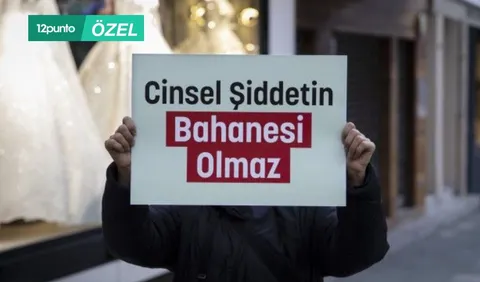
Lawyer Sevda Demirtaş drew attention to another point regarding the crimes excluded from the scope: "Violence against women does not only include actions that result in death. Therefore, the regulation in question threatens women's right to life. This policy of impunity encourages the perpetrators. We have been saying from the very beginning that acts of violence against women will increase."
Lawyer Aslı Koçak Arıhan from Ankara Bar Association listed what women whose perpetrators may be released with amnesty should do:
"If there is such a possibility, they need to get information about their own files. They should notify police stations and certain organizations and ask for information. Also, they should definitely download the KADES program. If it is certain that the perpetrator will be found, they need to take the necessary precautionary decisions. There is no decision about anything you do not request. Women should demand and ask for legal and social support regarding violence against women from bar associations, municipalities and ŞÖNİMs. For example, the Ankara Bar Association's Gelincik Center is open 24 hours a day, 7 days a week." "We have lawyer friends on the other end of the phone at 444 43 06."
Lawyer Dilara Özuğur from Adana Bar Association reminded that the state is obliged to protect individuals, especially women, against foreseeable dangers and said, "The release of the perpetrator from prison does not eliminate the severity of the crime, does not end the victim's need for protection, and does not suspend the positive obligation of the state."
Lawyer Nural Kılıç reminded the murder of 20-year-old Ceren Özdemir, a 3rd year student of Ordu University Faculty of Fine Arts, in December 2019. Özdemir was killed by 35-year-old prison escapee Özgür Arduç. Kılıç said:
"Ceren's murderer was a person who had a tendency to be aggressive since childhood and was convicted for stabbing a 15-year-old disabled child, in other words, he was obviously dangerous. This perpetrator was sent to an open prison for 'good behavior' during the penal execution process, and although he escaped from there twice, the necessary risk management was not carried out, and as a result, he killed a young woman, Ceren, with a monstrous feeling after following her for four kilometers. This means that the system completely failed in the dangerousness analysis."
"The state has to see the risk of these evacuations"
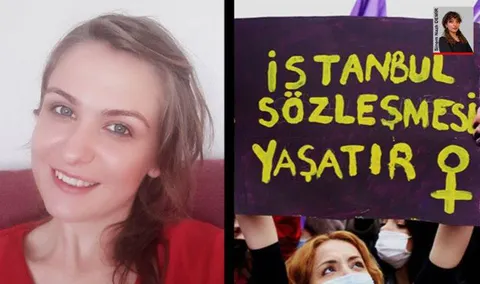
Lawyer Kılıç concluded his speech by drawing attention to the importance of the Istanbul Convention and the necessity of protection mechanisms:
"Even though Turkey has withdrawn from the Istanbul Convention, its duty to protect women against violence continues in accordance with the 'due diligence (positive obligation) principle' arising from international law and our own Constitution. The State must take reasonable and effective measures to prevent the risk arising from these evictions. Moreover, this risk includes the perception of impunity and the trust created by the withdrawal from the Istanbul Convention for potential perpetrators."
The Male Violence Database was implemented within the scope of the 'Strengthening Participatory Democracy in Turkey: Gender Equality Monitoring Project Phase III LOT I', co-financed by the European Union and carried out by the Gender Equality Monitoring Association (CEİD).
You can access the database at https:// Erkeksiddeti.org/.
(SND/EMK)