Crimes committed in Türkiye were examined by the Ministry of Justice and Türkiye's "Crime Atlas" was created by working according to provinces and geographical regions.
The 'Crime Atlas' prepared by the Ministry of Justice includes crime rates on a provincial and regional basis in Türkiye. According to the "Crime Atlas" prepared, "crimes committed against bodily immunity", including intentional and negligent wounding, ranked first in 62 provinces in cases filed under the Turkish Penal Code (TCK). In the region-based research, it was seen that "crimes committed against bodily immunity" took the first place in the cases filed in the Aegean, Black Sea, Mediterranean and Eastern Anatolia regions.
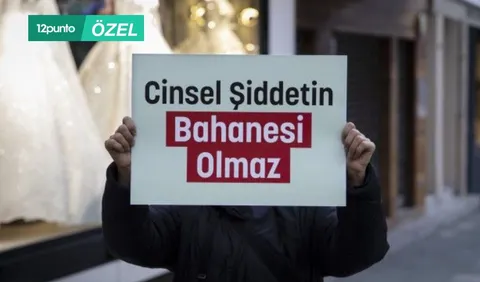
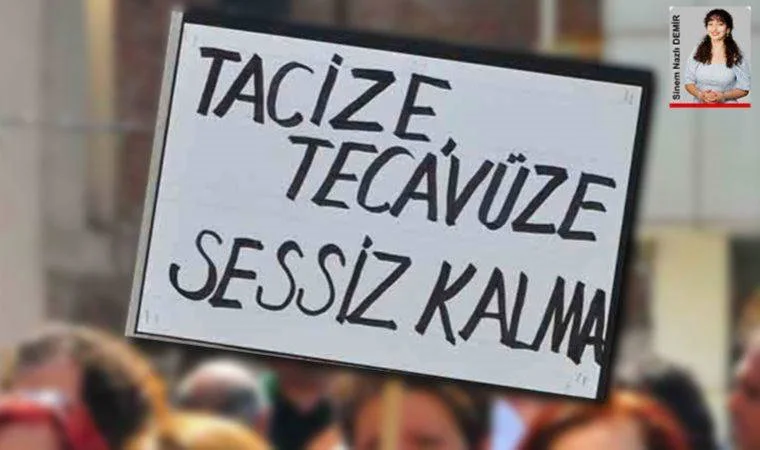
Sexual immunity (bodily immunity) is violated by performing sexual acts against persons. Sexual behavior refers to actions performed for a sexual purpose or to satisfy sexual desires. In the law, crimes against sexual immunity are regulated in four main types of crimes: sexual assault, sexual abuse of children, sexual intercourse with a minor and harassment.
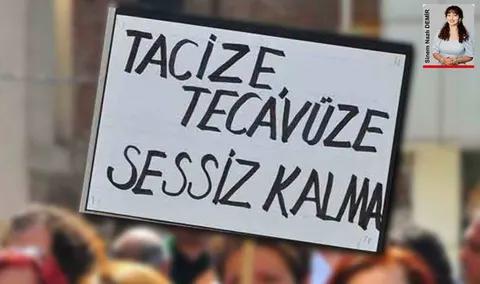
Psychologist Tansu İlker told Cumhuriyet about harassment, which covers a large part of the crimes against physical immunity, and its repercussions arising from gender inequality.
EVERY STEP TAKEN FROM THE POINT YOU SAID "NO" IS HARASSMENT..."
Explaining that harassment includes trying to communicate without approval, İlker said that the act of harassment can also be carried out by talking, whistling or being kept under surveillance. Stating that one of the important points is to continue these behaviors without the consent of the other person, İlker said, "Sexual harassment is sexual behavior carried out with words, body language or other means of communication. For example, it can be considered as making sexual conversations, showing one's genitals, or kissing. "If there is any unwanted contact, an action that violates the person's bodily immunity, situations such as trying to kiss, trying to touch her hair or penetration are considered sexual assault," he said.
Stating that there are many behaviors that the society sees as 'normal' but can be described as violations of rights, İlker said, "While every step taken from the point you say 'No' is harassment, especially children saying 'No' is not accepted, their boundaries are not respected and they can even be abused. "At this point, raising the child's awareness within the scope of the concepts of "undesirable behavior" and "approval" plays an important role in preventing harassment from normalizing," he said.
''ATTACKS ON BODY INTEGRITY CAN BE MUCH MORE CHALLENGING''
İlker said that in the patriarchal system, men are raised with wider boundaries and rights than in egalitarian systems, and that men who are raised with this perception have difficulty in hearing and seeing the good of the other person, and they may try to turn the no they hear into yes. İlker stated that if there is no mutual consent in sexual intercourse, it is not sexual intercourse but sexual assault and violence, and that society interprets a person's "no" as being coy.
Talking about the effects of harassment on the individual and the victim-blaming attitudes towards women, İlker continued his speech as follows:
A person who is subjected to harassment can react in many different ways within a wide spectrum, and what provides these different reactions is the person's way of experiencing and interpreting the event.
Especially attacks on physical integrity can be much more challenging. The person may experience symptoms such as memories of the event coming to mind, avoiding stimuli that revive the traumatic memory, not being able to plan for the future, avoiding activities that previously gave pleasure, and not being able to experience positive emotions.
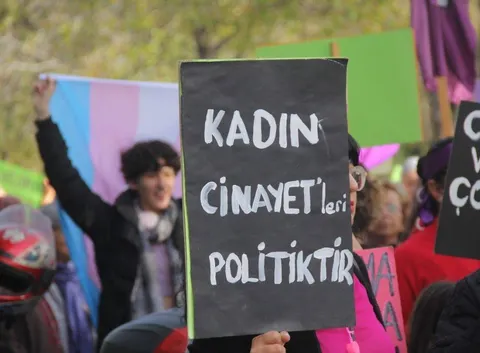
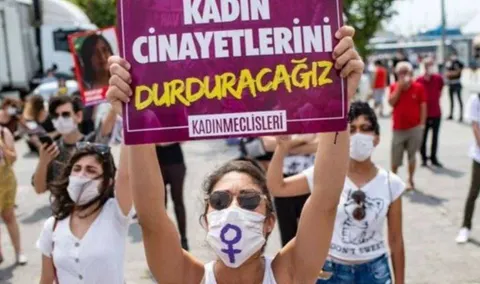
The cause of gender-based violence is not the result of the upbringing men receive from their mothers; It is the power inequality between men and women that has existed from past to present.
Deterrent penalties should be given, laws and international agreements should be implemented regularly, work should be carried out to support people subjected to violence in public institutions and organizations, and non-governmental organizations working in the field of women and children should be strengthened.